How Smartboards Are Transforming Modern Education
Education is changing rapidly. Today’s students are growing up in a digital world where technology is a natural part of everyday life. As classrooms evolve, traditional teaching methods are also making way for more interactive, engaging, and technology-driven learning experiences.
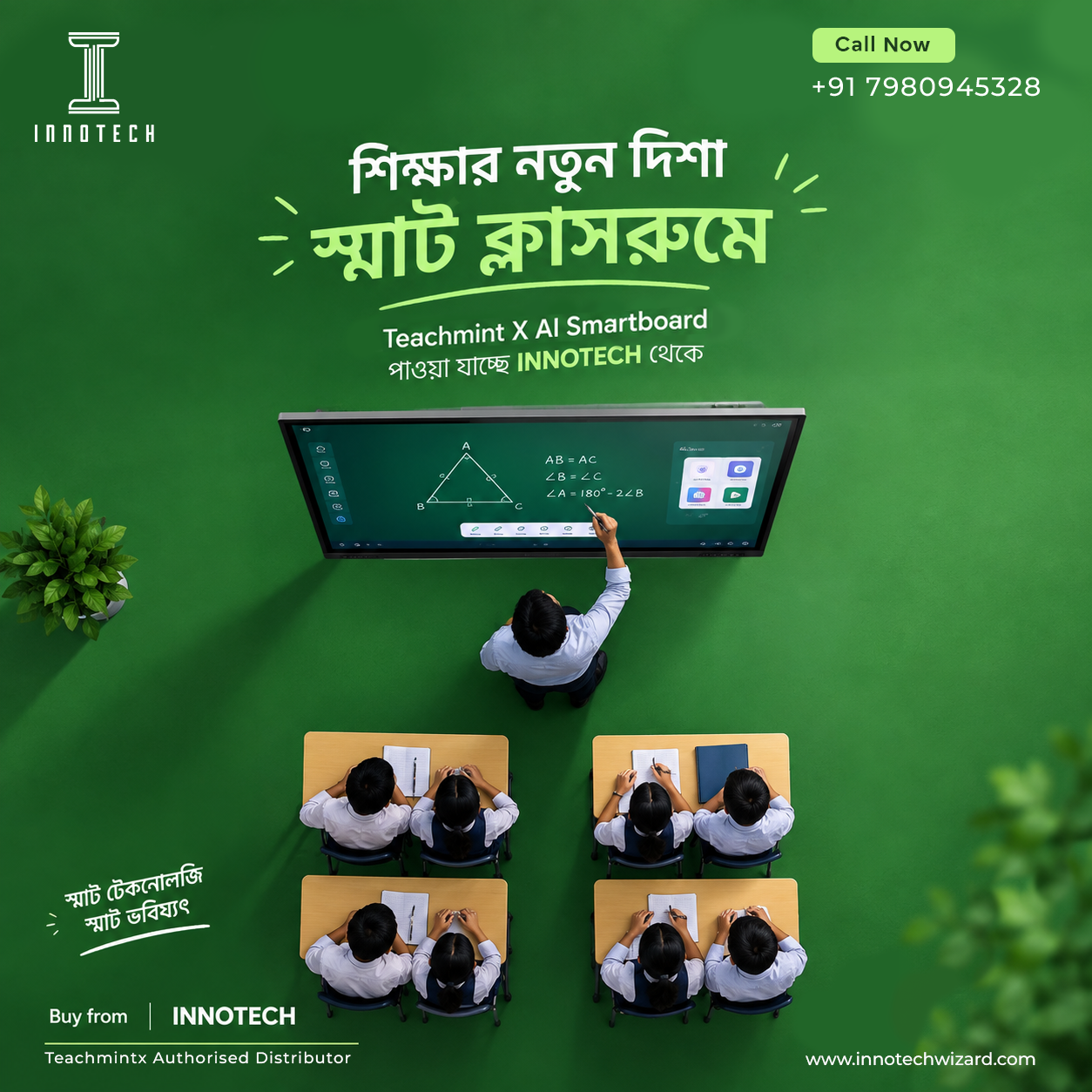
This new journey can be described as “Shikhar Notun Disha” — a new direction towards better learning.
One of the key technologies helping shape this new direction is the Smartboard.
From Traditional Classrooms to Smart Classrooms
For decades, classrooms have relied on blackboards, whiteboards, textbooks, and static teaching materials. While these methods remain valuable, modern students can benefit from a more visual and interactive approach.
A smartboard combines the familiar concept of a classroom board with digital technology. Teachers can display presentations, videos, diagrams, animations, websites, educational content, and interactive activities directly on the screen.
Instead of simply reading about a topic, students can see it, explore it, and interact with it.
Making Learning More Interactive
One of the biggest advantages of smartboards is interactive learning.
A teacher can explain a science concept using animations, demonstrate mathematical problems step by step, explore geographical maps, or display historical events through videos and visuals.
This transforms the classroom from a place where students simply listen into an environment where they can actively participate.
For example, instead of explaining the solar system only through a textbook image, a teacher can display an interactive 3D model and visually explain the movement and position of planets.
Making Difficult Concepts Easier
Some subjects and concepts can be difficult to understand through text alone.
Smartboards allow teachers to use visual explanations, diagrams, animations, videos, and interactive models to simplify complex topics.
A difficult scientific process can be shown through an animation.
A mathematical problem can be solved visually, step by step.
A historical event can be explained using photographs, maps, timelines, and videos.
This can help students connect theoretical knowledge with visual understanding.
Supporting Different Learning Styles
Every student learns differently.
Some students understand better through visuals, while others learn through listening, interaction, demonstrations, or practical examples.
Smartboards give teachers the flexibility to combine different types of content within one lesson.
A single classroom can include:
- Visual presentations
- Educational videos
- Interactive activities
- Diagrams and animations
- Digital quizzes
- 3D learning content
- Real-time demonstrations
This creates a more flexible learning environment where teachers can adapt their teaching approach to their students.
Technology That Supports Teachers
Smartboards are not only beneficial for students; they can also make teaching more efficient.
Teachers can prepare digital lessons, organize educational resources, display content instantly, and switch between different learning materials during a class.
With modern AI-powered educational technologies, teachers can also explore new ways of generating lesson plans, visual explanations, quizzes, and other classroom resources.
Technology does not replace the teacher. Instead, it can become a powerful tool that helps teachers teach more effectively.
Creating a More Engaging Classroom
Student engagement is an important part of effective education.
When lessons include interactive visuals, videos, activities, and real-time participation, students may become more involved in the learning process.
A smart classroom can turn a simple lesson into an experience.
Instead of asking students to imagine a concept only from words on a page, teachers can bring that concept to life on the screen.
Preparing Students for the Future
Modern education is not only about remembering information. Students also need to develop creativity, problem-solving abilities, digital literacy, collaboration, and the ability to explore information.
Smart classroom technology can help create an environment where these skills are practiced naturally.
By becoming familiar with digital tools from an early stage, students can become more comfortable with the technology-driven world they will enter in higher education and future careers.
The New Direction of Education
The future of education is not about completely replacing traditional teaching. It is about combining the strengths of teachers, proven teaching methods, digital resources, and emerging technologies.
A smartboard is one part of this larger transformation.
When used effectively, it can help teachers make lessons more visual, interactive, flexible, and engaging.
Shikhar Notun Disha is about moving towards an education system where technology supports teachers, students participate actively, and learning goes beyond the pages of a textbook.
The classroom of tomorrow is not simply a room with a digital screen.
It is a classroom where ideas become visual, concepts become interactive, and learning becomes an experience..